Transfer time is the gap your fridge and router run on nothing, and the input voltage window decides whether the inverter accepts weak mains at all. Both are published per model across the Felicity range - here they are, side by side.
The mains where you live comes and goes, and every time it goes something in the house notices. The fridge clicks off, the router drops its connection, the fan stops and starts, and the work on the computer screen is gone. Two rows on an inverter's specification sheet decide how much of that you keep living with, and they are not the two rows anybody sells you on.
The first is transfer time: the gap between the mains disappearing and the inverter's own output arriving. During that gap your equipment is running on nothing. Across our Felicity range the published figures are 0, 10, 15, 20 and 50 milliseconds, and they are stated per model, not per brand. The second is the AC input voltage range: the window inside which the inverter will accept the mains at all. That splits into a wide, forgiving 90-280 V on the off-grid and inverter-charger families, and a narrower 184-264.5 V on the grid-tied hybrids. A machine with a fast changeover and a narrow window will disconnect from a sagging supply that a slower machine would have kept using. Which one is right for you depends on whether your problem is the cut, the sag, or both.
We are an authorised Felicity Solar distributor and we supply Iraq, including Baghdad, Basra, Erbil and Mosul. Tell us what actually happens in your building — how the supply behaves and what you need to keep running — and we will name the model whose rows match it: WhatsApp +971 4 255 0887, +971 4 255 0887, or sales@felicitysolar.me.
What does transfer time actually mean in the house?
An inverter that sits between the mains and your sockets has to notice the supply has gone, decide it is really gone rather than a flicker, and start feeding your circuits from the battery instead. Transfer time is how long that takes. It is measured in milliseconds, which sounds trivial until you remember that a great deal of modern equipment is designed around exactly that timescale.
Some things do not care at all. A lamp, a fan, a water heater, an electric kettle — they will not notice any of the figures below. Some things care a lot: anything with a processor and a power supply that expects continuous voltage. What we will not do is tell you that your particular router survives 20 ms but not 50 ms. That threshold belongs to the device, not to the inverter, and it is not printed on anything we are allowed to publish from. What we can do is give you the inverter's side of the number exactly, so you can match it against a device that matters to you.
The transfer times published across the Felicity range
| Transfer time | Models | Family |
|---|---|---|
| 0 ms | IVGM75KHP3G1, IVGM80KHP3G1, IVGM100KHP3G1, IVGM125KHP3G1 | Three-phase hybrids, 75-125 kW |
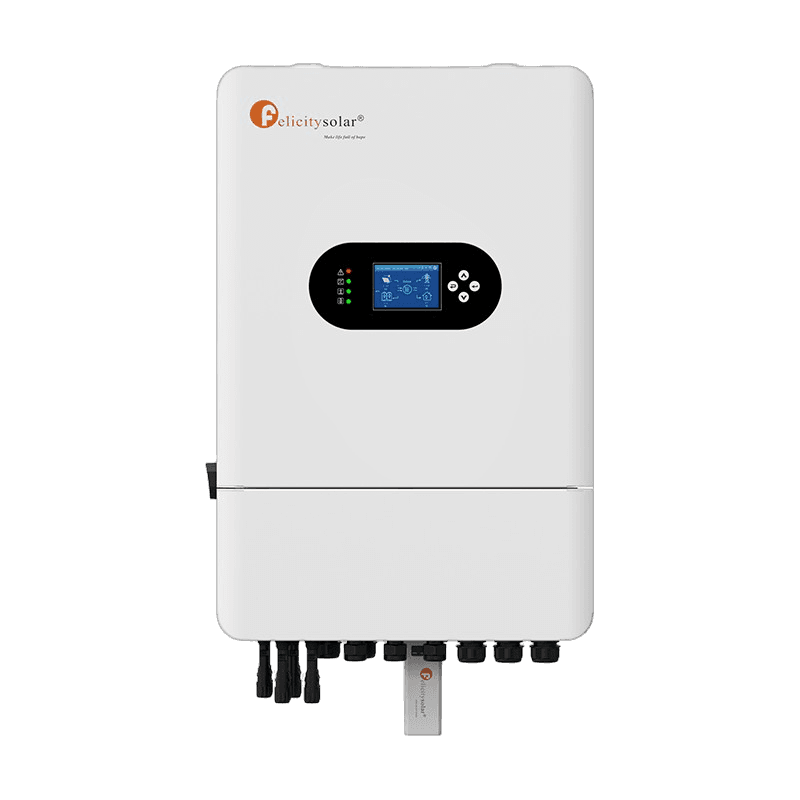
| 10 ms | IVGM5KLP2G1, IVGM6KLP1G1, IVGM6KLP2G1, IVGM7K6LP1G1, IVGM7K6LP2G1, IVGM8KLP1G1, IVGM8KLP2G1 | Single-phase hybrids, 5-8 kW |
| 10 ms | IVGM25KHP3G2, IVGM29K9HP3G2, IVGM30KHP3G2, IVGM40KHP3G2, IVGM50KHP3G2, T-REX-25KHP3G01, T-REX-29K9HP3G01, T-REX-30KHP3G01, T-REX-40KHP3G01, T-REX-50KHP3G01 | Three-phase hybrids, 25-50 kW |
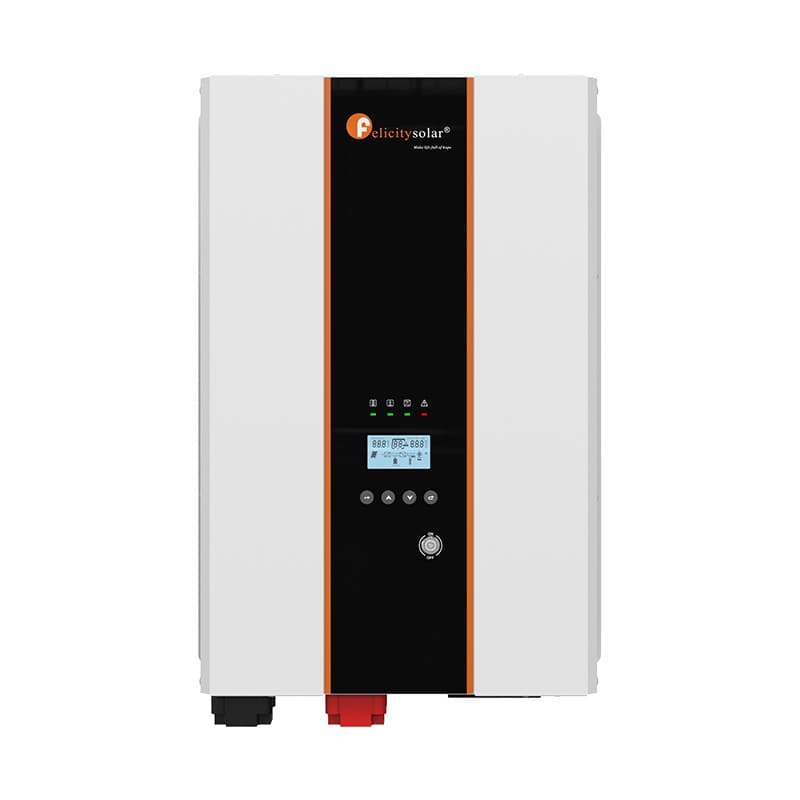
| 15 ms | IVPS1512, IVPS2512, IVPS2524, IVPS3524, IVPS5024, IVPS5048, IVPS7548, IVPS10048, IVPM5048, IVPM7548, IVPM10048 | Inverter/chargers |
| 20 ms | IVGM5KLP1G1, IVGM10KLP3G1, IVGM12KLP3G1, IVGM14KLP3G1, IVGM15KLP3G1, IVGM16KLP3G1, IVGM18KLP3G1, IVGM20KLP3G1, T-REX-3KLP1G01, T-REX-3K6LP1G01, T-REX-4KLP1G01, T-REX-4K6LP1G01, T-REX-5KLP1G01, T-REX-6KLP1G01, T-REX-10KLP3G01, T-REX-10KHP3G01 | Hybrids, single and three-phase |
| 50 ms | IVEM3024, IVEM4024-II, IVEM5048, IVEM6048-II, IVEM8048-II, IVEM12048-11 and the SALV/LV variants | Off-grid inverters |
Four records publish a mode-dependent figure instead of one number, which is more useful than it looks. The IVBM10048P1G1 and the IVBM8048P1G1 both state 10 ms in UPS mode and 20 ms in appliance mode. The IVCM3224P1G2 states 4 ms in UPS mode and 20 ms in appliance mode. And the IVEM5048 publishes three figures on the same record: a general transfer time of 50 ms, 20 ms in appliance mode and 10 ms in UPS mode. We print all of them rather than pick the flattering one, because which figure applies to you depends on which mode the unit is set to.
Will the inverter accept the mains you actually have?
This is the row that matters when the supply is present but weak, which is a different complaint from the supply being absent. The inverter has an input window, and below the bottom of it the machine disconnects and runs from the battery instead — which is correct behaviour, but if it happens all afternoon it feels like a fault.
| Input voltage range | Models | What it means |
|---|---|---|
| 90-280 V | IVPS and IVPM inverter/chargers, IVEM off-grid inverters, IVBM8048P1G1, IVBM10048P1G1, the IVCM pair | A wide, forgiving window for an unstable supply or a generator |
| 184-264.5 V | IVGM and T-REX hybrids, including IVGM5KLP1G1, IVGM10KLP3G1, T-REX-5KLP1G01, IVGM75KHP3G1, IVGM100KHP3G1 | A grid-tied window; the unit expects a supply close to nominal |
| 65-140 V or 80-140 V | IVEM3048-SALV, IVEM5048-SALV, IVEM5048-LV-3000VA, IVEM5048-LV-5000VA, IVPS3524P1G1-LV, IVPS5048P1G1-LV | Low-voltage variants for 110-127 V nominal supplies |
The IVPS, IVPM, IVEM, IVBM and IVCM records go one step further and publish two windows, one per operating mode: 90-280 V in appliance mode against 170-280 V in UPS mode. Appliance mode is the tolerant setting, meant for a supply that wanders. UPS mode is the strict one, meant for sensitive equipment that you would rather run from the battery than feed with poor mains. That choice is a setting on the machine, not a different purchase.
The trade-off nobody explains at the counter
Look at the two tables together and the pattern is obvious once you see it. The fast changeovers — 10 ms and 20 ms — sit mostly on the IVGM and T-REX hybrids, and those are the models with the narrow 184-264.5 V input window. The wide 90-280 V window sits on the IVPS, IVPM and IVEM families, and those publish 15 ms and 50 ms. If your problem is a supply that sags rather than a supply that vanishes, the fast machine is not automatically the right one.
One model gets both sides of it, and it is worth naming for exactly this reason. The IVBM10048P1G1, a 10 kW single-phase off-grid inverter, publishes the wide 90-280 V appliance window and 10 ms in UPS mode with 20 ms in appliance mode. It also states a maximum AC charge current of 200 A, IP65 protection, pass-through without a battery fitted, and a maximum AC pass-through current of 65 A. Its 8 kW sibling, the IVBM8048P1G1, carries the same windows with 150 A of charging and 53 A of pass-through.
The thresholds are published to the volt and the hertz
Where most spec sheets stop at a range, the IVPS and IVEM records publish the exact points at which the machine lets go of the mains and the exact points at which it takes it back. These are from the IVPS5048.
| Threshold | Figure |
|---|---|
| Low line disconnect, appliance mode | 90 V |
| Low line reconnect, appliance mode | 100 V |
| Low line disconnect, UPS mode | 170 V |
| Low line reconnect, UPS mode | 180 V |
| High line disconnect | 280 V |
| High line reconnect | 270 V |
| Low frequency disconnect / reconnect | 40 Hz / 42 Hz |
| High frequency disconnect / reconnect | 65 Hz / 63 Hz |
The gap between each disconnect and its matching reconnect is deliberate. It stops the inverter from flapping in and out of mains a hundred times an hour when the supply is hovering exactly at the limit — which is precisely the condition that makes a poorly matched machine unbearable to live with.
How quickly does it refill the battery when the mains comes back?
If the supply is only available in windows, the useful question is not just whether the inverter switches quickly, but how much charge it can pull in while the mains is there. That is the AC charge current row, and it varies more than anything else on the sheet.
The IVPS5048 charges at up to 50 A, the IVPS7548 at 60 A and the IVPS10048 at 80 A. The IVEM5048 takes 100 A, the IVEM6048-II 120 A, the IVEM8048-II 150 A and the IVEM12048-11 240 A. The IVBM8048P1G1 takes 150 A and the IVBM10048P1G1 200 A. On the hybrid side the T-REX-10KLP3G01 states 200 A and the IVGM5KLP1G1 100 A. A short mains window and a small charger is the combination that leaves you flat by midnight.
Will it still run the house with the battery disconnected?
A small row with large consequences on the day a battery goes away for service. The IVEM family, both IVBM models, the IVCM pair, the IVGM10KLP3G1 and the T-REX-10KLP3G01 all state pass-through without battery: yes. Every IVPS and IVPM listing states no. If your site has to stay powered from the mains while the pack is out, that single row decides the purchase.
Heat belongs in the same conversation, particularly in Basra. The IVPS and IVPM records state an operating temperature range of 0-40 °C. The IVEM5048 states 0-55 °C, the IVEM8048-II -10 to 50 °C, and both IVBM models 0-50 °C. A unit rated to 40 °C ambient belongs in the coolest ventilated space you have, not in a sealed cupboard on a summer afternoon.
Choosing for Baghdad or Basra in one paragraph
If your mains vanishes often and sags badly in between, start with the IVBM10048P1G1: the wide 90-280 V window, 10 ms in UPS mode, 200 A of charging and IP65. If the supply is reasonably close to nominal when it is there and you want the shortest gap, the IVGM5KLP2G1 hybrid publishes 10 ms. If you want the largest charger for the smallest mains window, look at the IVEM range and its 100 to 240 A. And if you are wiring a workshop or a building rather than a flat, the three-phase hybrids sit at 10 ms, with 0 ms on the 75-125 kW class. The full range is on the inverters page.
Frequently Asked Questions
What is transfer time on an inverter?
Which Felicity inverter has the fastest transfer time?
My mains voltage is low. Will the inverter still accept it?
What is the difference between appliance mode and UPS mode?
How fast can the inverter recharge the battery while the mains is on?
Who supplies Felicity Solar inverters in Iraq?
Ready for a personalized quote?
WhatsApp us — average reply time under 15 minutes.