A mast, a work camp, a holding or a guard post with no supply behind it. What changes when there is no grid to top the battery up: how much extra solar to carry, the four things that decide how long you last, whether the box can stand outside, and what remote monitoring can honestly promise.
If this system stops, nobody is driving out to switch the site over to something else. That, and not distance, is what makes a site remote: there is no supply worth connecting to — a telecom mast on a ridge, a contractor's camp between two towns, a holding on the edge of the Al Ahsa oasis, a security post on a boundary that nobody strings a cable to. Saudi Arabia has all four, and in every one of them the electrical problem is the same: there is no second source standing behind the system. We are an authorised Felicity Solar distributor and supply Saudi Arabia from our own stock, and what follows is the sizing logic we apply to a site like that, quoted from the rows a Felicity product page actually prints.
What you lose when there is no grid behind you
An inverter-charger has two ways to fill a battery: from the array, and from an AC source at its input. Look at the IVPS5048 record and the AC path is described precisely — the input voltage waveform row reads Sinusoidal (utility or generator), the AC charge current row reads 50 A, and the appliance-mode input window is 90-280 V against 170-280 V in UPS mode. On a connected site that path is a safety net you never think about. Remove it and the array becomes the only way energy enters the system, seven days a week, in every weather.
One more row shows how completely the grid is assumed elsewhere in the catalogue: the IVPS5048 states Pass-Through Without Battery: No, while the IVEM5048 states pass-through works with no battery fitted. At a remote site neither helps, because there is nothing upstream to pass through, and every decision below follows from that.
Why you buy more panels than the load asks for
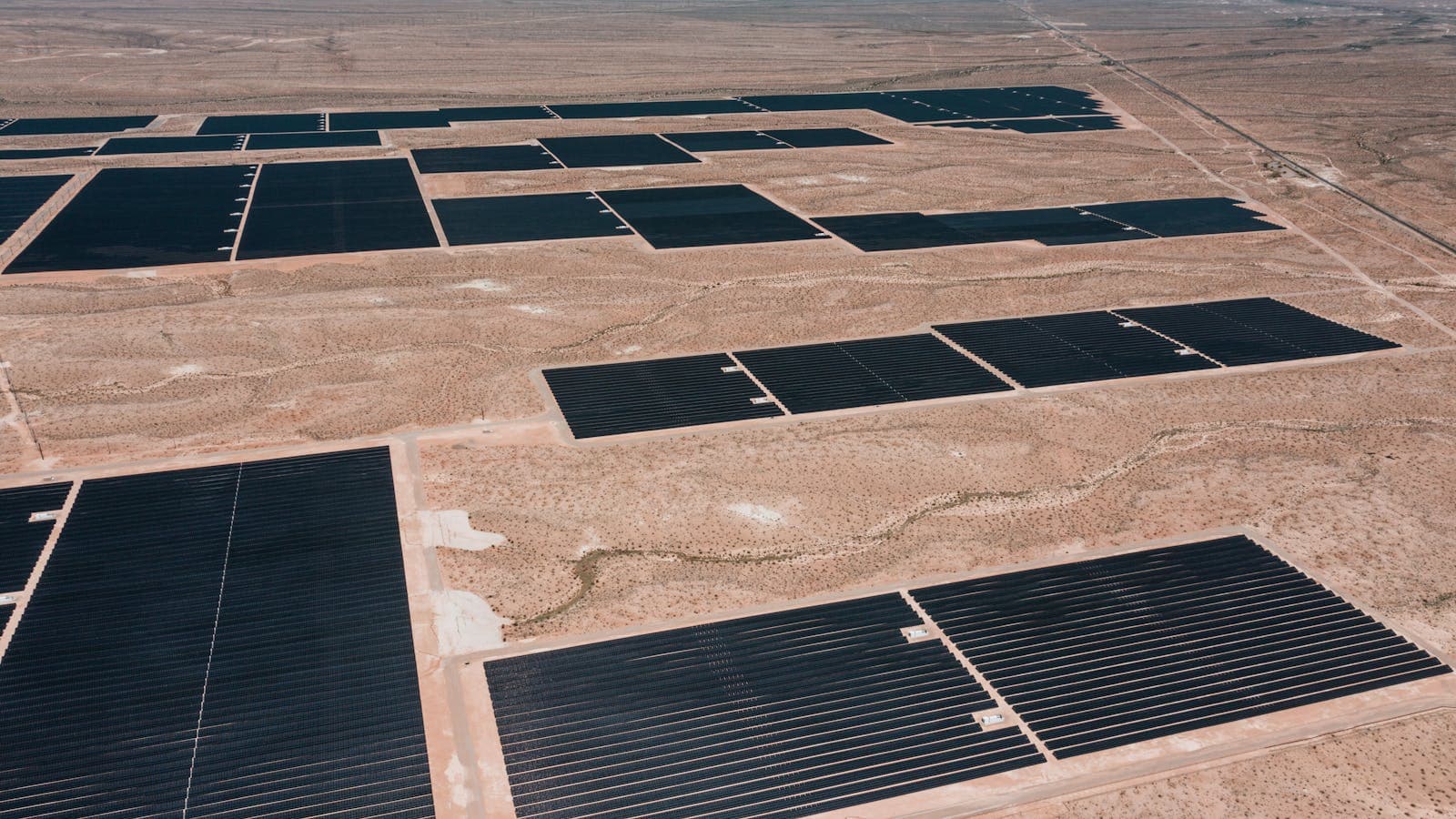
The one lever a remote site has on a poor production day is array headroom, and Felicity publishes it as a maximum PV input power that is often far above the inverter's own AC rating. The IVAM8048P1G1 is rated 8 kW and 8 kVA at 230 V and accepts up to 16 kW of PV — twice its own AC rating — across two MPPT trackers taking 27+27 A over 2+2 strings. The IVAM12048P1G1 does the same at the next size up: 12 kW and 12 kVA on the AC side, 24 kW of maximum PV input on 32+32 A over 2+2 strings. Smaller machines are tighter: the IVEM5048 takes 6 kW of PV against 5 kW of output, the T-REX-5KLP1G01 takes 6.5 kW against 5 kW, and the IVGM5KLP2G1 takes 7.5 kW against 5 kW. That ratio is the number to compare when the site cannot be visited often.
Tracker count is the second half of the same decision. The IVEM5048 has one MPPT covering 120-500 V. The IVAM6048P1G1 and IVAM8048P1G1 have two, tracking 90-425 V and narrowing to 200-425 V at full load. The IVGM10KLP3G1 has two across 160-650 V, and at the top of the range the IVGM100KHP3G1 carries eight and the IVGM125KHP3G1 ten. Two trackers let a fixed frame face two directions and spread production across the day; ten let a camp array be built in sections that fail independently.
String design has to be done off the module's own figures. The GK-1-72HTBD-580M is a 580 W glass-glass module with an open-circuit voltage of 51.47 V, a short-circuit current of 14.37 A, a 30 A maximum series fuse and a DC1500V (IEC) system voltage, and it prints its temperature coefficients: Pmax at -0.29% / °C, Voc at -0.25% / °C, Isc at +0.045% / °C. The Voc coefficient is what limits string length, and it is published rather than estimated. The frame is checked against the stated 5400Pa front and 2400Pa rear static load, and the 31 kg module weight is what two men on a track road care about.
The battery is your whole reserve: four things to check, not one
On a connected site a battery is a convenience. On a remote one it is the only reservoir, and the headline kWh is the least informative figure on the page.
1. How much of the battery you can actually use
The FLA48200 stores 10 kWh of nominal energy and states a depth of discharge above 95% on its own row. The FLA48300 stores 15 kWh nominal with the same ≥95% row, and the FLA48400TG1 stores 20.48 kWh at 95%. Nominal energy is not energy released per cycle; the two rows have to be read together or the autonomy calculation is wrong from the first line.
2. How many years of daily charging it is built for
The FLA48100, FLA48200, FLA48280 and FLA48300 all state 6,000 cycles, and the FLA48400TG1 states above 6000. That is the figure that makes a maintenance-light site viable, because it is the number of full cycles the pack is rated for rather than a period in years.
3. What it gives all day, and what it gives for a moment
Every Felicity lithium pack prints these separately, and the gap is large. The FLA48100 sustains 100 A or 5,000 W and allows 150 A or 7,500 W for 15 seconds. The FLA48300 sustains 150 A with 120 A recommended and allows 200 A or 10,000 W for 15 seconds. The FLA48400TG1 sustains 200-250 A and holds 300 A, or 10,200-13,000 W, for 15 seconds. When the remote load is a motor, the burst row is the one that matters.
4. It will run in cold it refuses to charge in
The FLA48200, FLA48300 and FLB48280TG1 all charge from 0 to 55 °C but discharge from -20 to 55 °C. The pack will deliver on a cold morning and refuse charge on the same morning until it warms, and with no grid there is no other way to put energy in, so the enclosure the pack sits in is part of the electrical design. The FLA48300 also states storage at 0-35 °C, humidity of 5-95% and operation below 2000 m.
Where that charging floor is a genuine problem, the lead-acid alternative is worth pricing. The FL-OPzV-500AH-2V is a single 2 V OPzV cell rated 500 Ah at the 10-hour rate to 1.8 V per cell at 25 °C, charging from 0 °C to 50 °C but discharging from -40 °C to 70 °C. The trade is explicit: you series-string as many 38.5 kg cells as the bank voltage needs.
And one for later: how far it can grow
Remote sites grow, and the ceiling differs per model. The FLA48100 parallels to 15 units for 76.8 kWh, the FLA48200 to 15 for 150 kWh, the FLA48300 to 15 for 225 kWh and the FLA48400TG1 to 15 for 307.2 kWh, while the FLB48280TG1 allows up to 32. Plan the delivery on packed weight, not net: 160 kg for the FLA48300, 167 kg gross for the FLA48400TG1.
Does the site need a building, or can it stand outside?
This is the row that most often forces a civil work package nobody budgeted. The IVPS5048, IVPM5048, IVEM5048 and IVEM12048-11 are all IP21 and operate from 0-40 °C, 0-55 °C or -10 to 50 °C depending on the model — indoor machines that need a cabin or a cabinet. The IVAM6048P1G1, IVAM8048P1G1, IVBM10048P1G1, IVGM10KLP3G1 and T-REX-5KLP1G01 are IP65. At the top of the three-phase range the IVGM75KHP3G1, IVGM80KHP3G1, IVGM100KHP3G1 and IVGM125KHP3G1 are IP66 and state 0-100% non-condensing relative humidity. The IVDM4224P1G3 states IP6X.
The operating window travels with the rating: 0-40 °C on the IVPS5048, 0-50 °C on the IVBM10048P1G1, and -40 to 60 °C with derating above 45 °C on the IVAM and IVDM machines. Choosing an IP21 unit for an unshaded site commits the project to building something to put it in — and every battery in the range is IP21 too, so the pack needs that enclosure whichever inverter is chosen.
The same fork exists one level down. Where a telecom cabinet needs only a controller, the SCCM8048-II is an 80 A MPPT unit rated IP20 (Indoor & Vented) for 0°C to +55°C, harvesting 4400 W on a 48 V bank from up to 145 V of PV at 98% efficiency. The SCCM15048 is a 150 A unit rated IP54, taking 9000 W of array at a 500 V maximum across a 150-450 Vdc window, also at 98%. Same function, two different answers about what the cabinet has to be.
Can you watch the site from your phone?
Several Felicity products report over a network without an accessory. The IVEM5048 has built-in WiFi alongside its LCD and RS485 BMS link. The IVBM10048P1G1 has built-in Wi-Fi with RS485 and CAN. The IVGM10KLP3G1 offers WiFi or 4G monitoring behind an LCD touch screen. The SCCM8048-II carries CAN for parallel operation, RS485 for the BMS and built-in WiFi; the SCCM15048 adds built-in Bluetooth alongside RS485 and CAN on MODBUS. Where a unit has none, the IOTH2406 is the accessory: a 0.25 kg WiFi module whose RJ45 is wired PIN4 RS485-B, PIN5 RS485-A, PIN6 12V DC input and PIN7 GND, joining a 2.4G WiFi network and forwarding readings to shine.felicitysolar.com. It is CE marked and carries a 1 Year warranty.
Now the limit, stated plainly because a remote-site brochure usually will not. Every one of those paths needs a network on site — the IOTH2406 associates with a 2.4G WiFi network, and there has to be one. Where there is none, what you have is the LCD and LED panel on the unit and the RS485 or CAN link between inverter and battery BMS. That is how a technician diagnoses the system on the one visit they make, but it is not remote monitoring, and a specification that promises it at a site with no backhaul is promising something the equipment cannot deliver alone.
The pump, which is what most remote sites really run
A pump, a compressor or a workshop tool draws far more current starting than running, and the row that decides whether it starts is the surge rating together with its duration. The IVPS5048, IVPM5048 and IVEM5048 state 2*rated (5s) with a motor-start-capable row reading Yes, the IVPS and IVPM families reaching it through a low-frequency transformer-based topology. The IVAM8048P1G1 and IVDM4224P1G3 hold twice rated power for a longer 10 seconds, while the IVGM25KHP3G2 and IVGM100KHP3G1 state 1.5*rated (10s) because a machine that size is chosen on continuous kW rather than on one motor. Read the multiple and the seconds as one figure. If the site already has an engine on it, that pairing is a separate subject with its own rows and we have written it up on its own.
Lighting a perimeter with no cable to it
Perimeter and gate lighting is usually kept outside the main system, because trenching from the plant room to a fence line is the most expensive metre of the project. A self-contained head carries its own module and pack, so nothing is dug. Where the layout must be drawn before the mast is up, the P3-60W-II is the record to open: it publishes a pole-to-pole spacing of 10-15 m beside its 3-5 m mounting height.
Getting a remote Saudi site quoted
Send four things and we can size the site rather than guess at it: the daily energy the load needs, the largest motor on it, whether there is a structure to put an IP21 machine inside, and whether the site has connectivity. We answer with model codes and the rows we chose them on. The equipment sits under inverters, batteries and charge controllers, and the market terms are on our Saudi Arabia page.
Frequently Asked Questions
What changes when a site has no grid at all?
How much extra solar should a remote site carry?
How long will the battery keep the site running?
Can a lithium battery be charged on a cold morning?
Does the inverter need to be inside a building?
Can I check the site from my phone if there is no signal out there?
Will it start the pump out on the farm?
Can I add more batteries later?
Ready for a personalized quote?
WhatsApp us — average reply time under 15 minutes.