A well, a packing yard and no cable to either. Who buys off-grid solar around Al Ahsa, what to check on a listing before you pay, and how one unit or a full pallet reaches your gate.
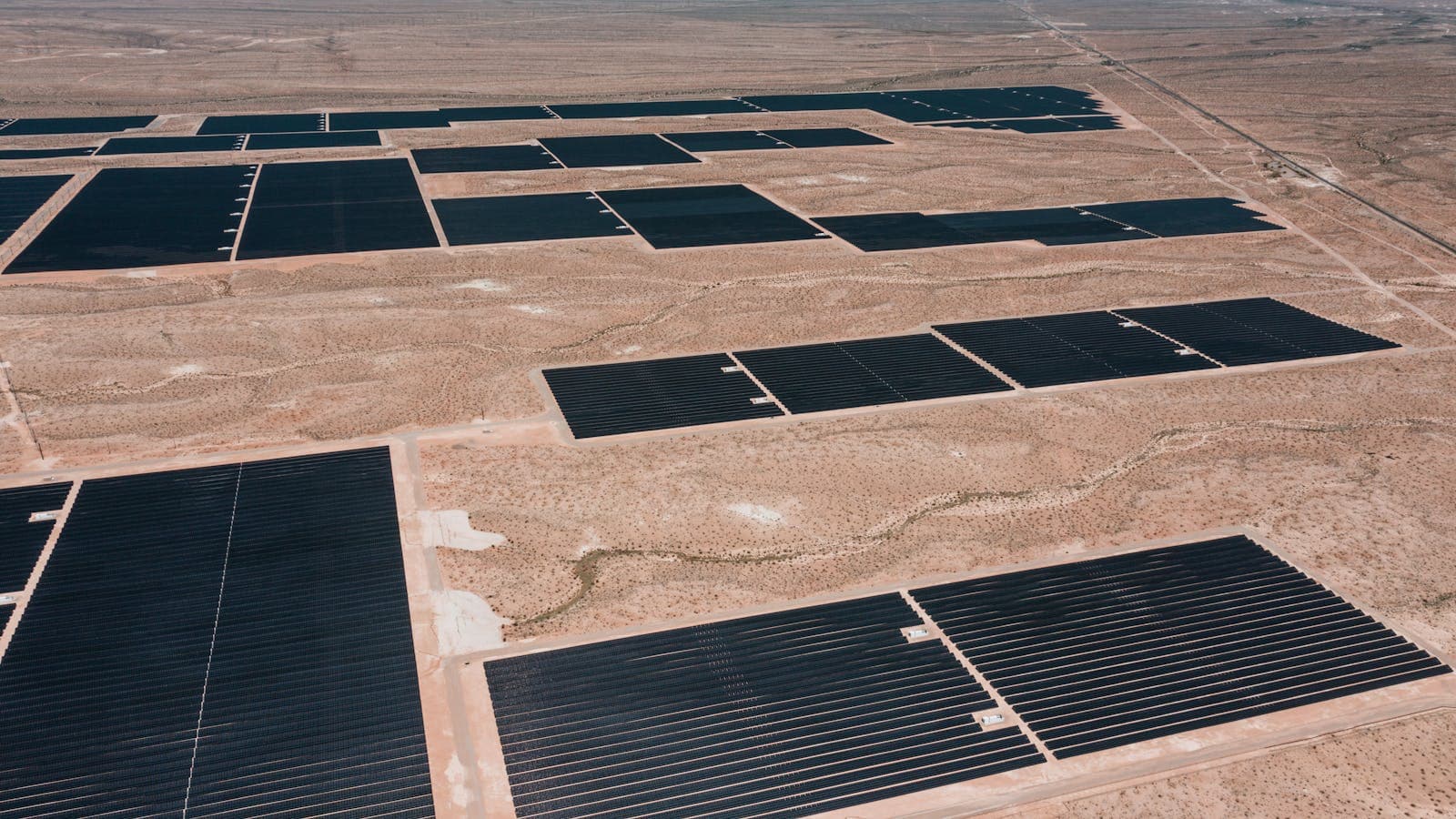
If your well, your packing yard and your holding sit where no cable was ever run, you are not waiting for the grid — you are buying your own. That is why off-grid equipment sells in Al Ahsa, the oasis of Saudi Arabia's Eastern Province: date palms, irrigation channels, packing yards and holdings that sit a long way from anything the electricity network was built to reach. We are the authorised Felicity Solar distributor supplying Saudi Arabia from our own stock, and the Eastern Province is served three ways out of the same warehouse — one unit to a farmer, a pallet to a trader, and ongoing backing for the installer who commissions the system.
This guide is the market picture: who buys, what changes when there is no grid to fall back on, and what to look at on a product page before you pay. The engineering lives in two companion guides so that nothing here is said twice — sizing an inverter for a pump takes the starting surge apart, and building the farm system works through the array, the bank, the controller and the generator in order.
Products mentioned in this article

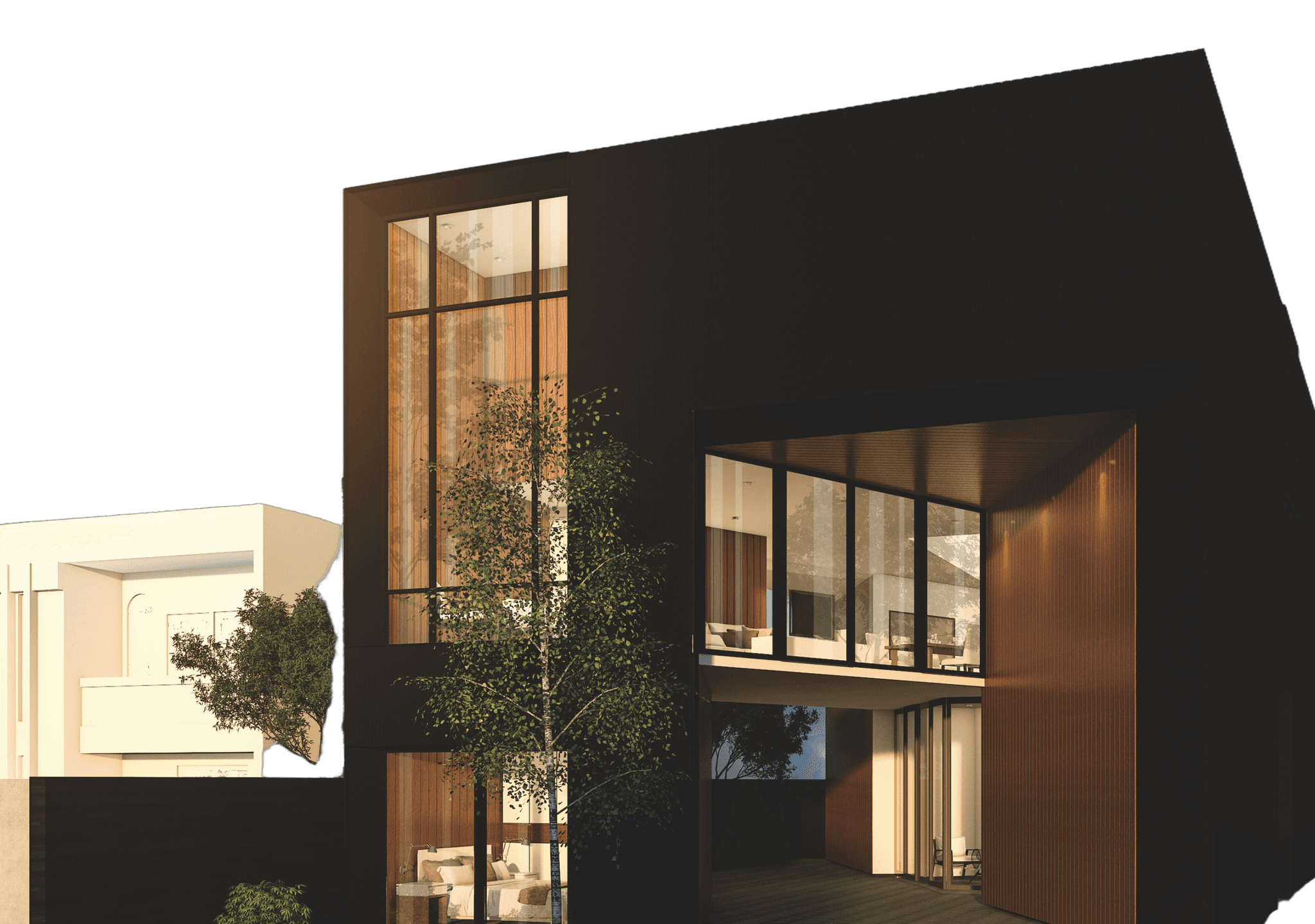
Felicity Solar IVAM8048P1G1 8kW Single-Phase Off-Grid Solar Inverter
- Rated Output Power:8 kW
- Max Efficiency:97.6 %
Felicity Solar FLA48300 51.2V 15kWh LiFePO4 Battery
- Nominal Energy:15 kWh
- Nominal Capacity:300 Ah
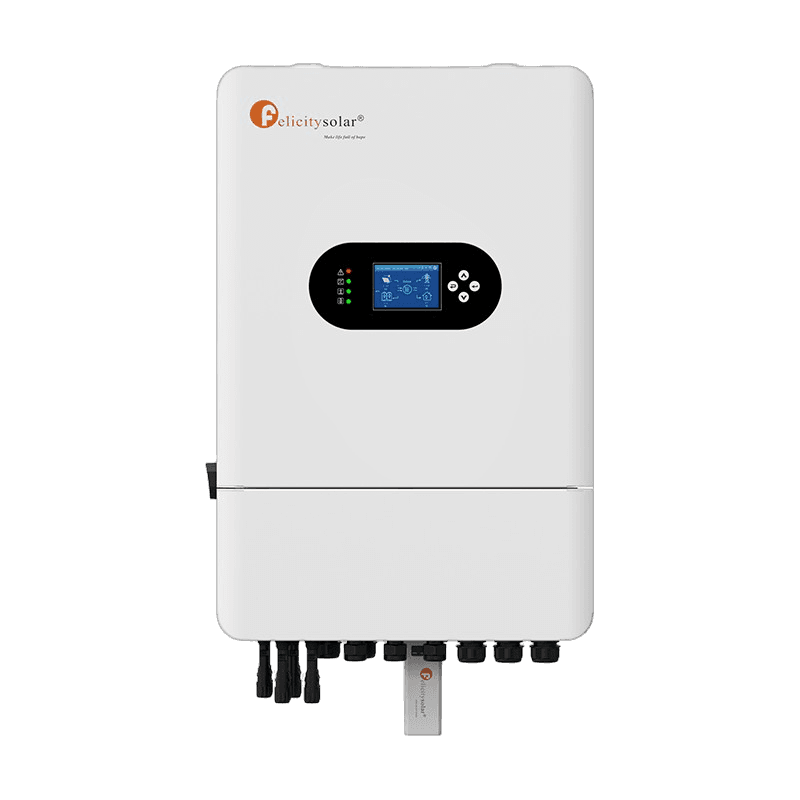
Felicity Solar IVBM8048P1G1 8kW Single-Phase Off-Grid Solar Inverter
- Rated Output Power:8 kW
- Max Efficiency:94.5 %
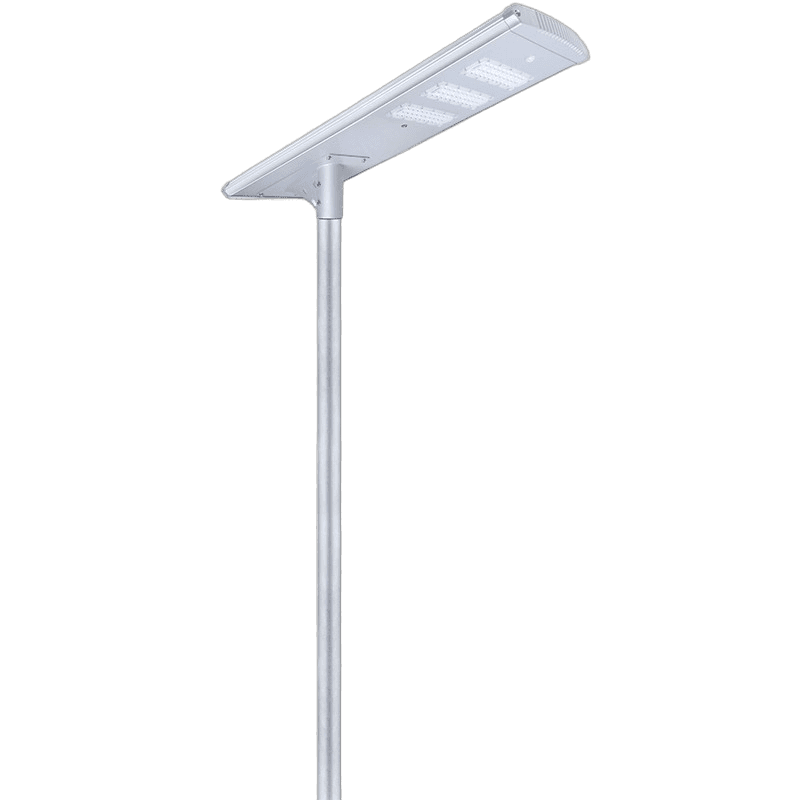
Felicity Solar A3-100W-S 100W Solar Street Light
- Power:100 W
- Luminous Flux (all light patterns):16000 lm
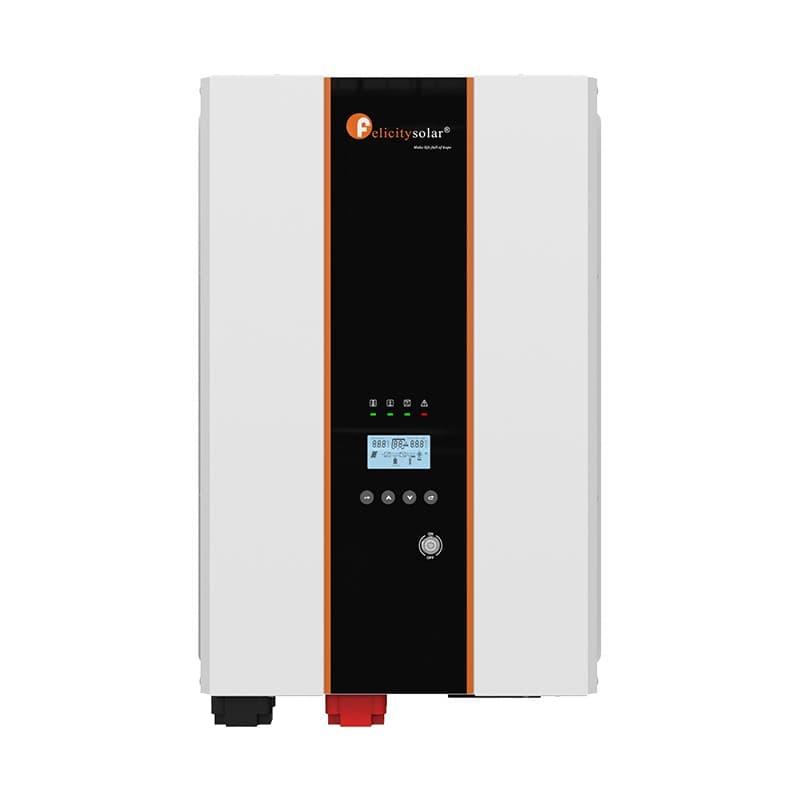
Felicity Solar IVPS10048 8kW Single-Phase Inverter / Charger
- Rated Output Power:8 kW
- Max Efficiency:90 %
Felicity Solar A3-150W-S 150W Solar Street Light
- Power:150 W
- Luminous Flux (all light patterns):24000 lm
Who buys off-grid in Al Ahsa
Four kinds of buyer reach us from the Eastern Province, and they want different things from the same catalogue.
- Date farms and irrigated holdings. The load here is a motor on a duty cycle, working through the hottest part of the day. The owner is normally replacing or supplementing a fuel engine, not wiring a house.
- Remote sites with no connection at all. Wells, stores, guard posts, workshops and staff rooms scattered across a holding, each wanting its own small independent supply because trenching a cable out to them costs more than the equipment does.
- Seasonal and mobile camps. Harvest crews and site accommodation that must be powered for a season and then moved, which puts a hard ceiling on how heavy any single item is allowed to be.
- Contractors and traders buying in quantity. They buy the same models repeatedly, and what they need from a supplier is stock depth, a model code that does not change between orders, and paperwork that clears without a second email.
What none of these buyers is doing is optimising a household electricity bill. The Saudi market page on this site puts it plainly: demand in the Kingdom concentrates in the commercial, industrial and off-grid segments — pumps, remote sites and backup — because residential supply is subsidised and a connected household rarely has a reason to move. The Eastern Province farm is the opposite case entirely. Very often there is no supply there to be subsidised.
What changes when there is no grid worth connecting to
A grid-tied system has a safety net. Whatever the array and the battery cannot cover, the meter covers, silently and without anybody noticing. Take that net away and four things change at once.
You become the utility. Every watt the site consumes is a watt your own equipment has to produce, store and deliver at the moment it is called for. There is no averaging across the month, no export credit, and no tolerance at all for a load nobody counted. An honest survey of what actually switches on — including the machines that only run in season — is worth more than any component decision taken after it.
The ceiling is a rating, not a bill. On the grid, an unplanned load costs money. Off the grid, it trips something. That is why an off-grid purchase is settled by reading rows rather than by comparing headline prices, and it is why every Felicity listing on this site prints its specification on the page instead of hiding it inside a file you have to download first.
The site has to be serviceable by whoever is standing on it. A holding outside Al Ahsa is not a city rooftop with a contractor twenty minutes away. A readable local display, a communication port that reaches a phone, and a fault code somebody can look up are worth more on a farm than a fractionally better efficiency number. Each inverter listing prints those rows: the IVBM8048P1G1 page, for instance, prints an LCD and LED display, a communication interface of RS232, RS485 and CAN, and BMS communication over RS485 and CAN.
Nothing you install is temporary. A fuel engine can be swapped in an afternoon. A battery bank, its cabling and its enclosure are a decade-scale decision, and the figures that decide whether that decade goes well — depth of discharge, cycle life, how many units may be paralleled — are printed on the battery's own page and nowhere else.
The four things you are actually buying
The Felicity catalogue on this site is off-grid equipment in four working categories, plus accessories. Knowing which one owns which problem saves a great deal of time.
- Off-grid inverters — the box that turns stored direct current into the mains-shaped supply a motor or a fridge will accept. The families differ more than their names suggest: IVPS is an inverter/charger with no solar input of its own, IVPM is the same platform with an MPPT tracker built in, and IVEM, IVBM and IVAM are progressively newer designs with wider solar windows. Choosing between them is the subject of the farm guide.
- Deep-cycle batteries — LiFePO4 packs in the FLA and FLB families, and 2 V OPzV gel cells for anyone who would rather build a bank out of individual cells.
- Charge controllers — the SCCM family, which is what lets an array be larger, or at a higher voltage, than the inverter's own solar input would allow.
- Solar street lights — self-contained poles with the panel, the battery and the luminaire in one assembly, for the yards and tracks that have no cable running to them.
What to check before you pay for a site out in the open
Five rows do most of the work on a site like this, and every one of them is printed on the listing.
- The IP rating tells you where the box may live. It is not a detail: the IVPS and IVPM families print IP21, which is an indoor, sheltered rating, while the IVBM8048P1G1 and the IVAM8048P1G1 print IP65. Controllers differ the same way — the SCCM15048 prints IP54 and the SCCM10048-II prints IP20 with the note "Indoor & Vented". A street light such as the A3-100W-S prints IP65 because it has nowhere to shelter.
- The operating temperature window is not one number, and not one question. The IVPS10048 and IVPM7548 print an operating range of 0-40 °C; the IVBM8048P1G1 prints 0-50 °C; the IVAM8048P1G1 prints -40 to 60 °C with derating above 45 °C. Batteries print two separate windows rather than one: the FLA48300 prints a charging range of 0-55 °C and a discharging range of -20 to 55 °C. Never carry a figure across from one page and assume it answers the same question on another.
- The warranty term is per record, not per catalogue. It is printed on each listing and it genuinely varies between products in the same category. Read the one in front of you rather than assuming a house rule.
- Certification names matter for the paperwork, not just the engineering. The FLA48300 prints UN38.3, CE-EMC and IEC 62619. The IVAM8048P1G1 prints IEC 62109-1, EN 62109-1, IEC 62109-2 and EN 62109-2. The GK-1-72HTBD-580M panel prints CE, IEC 61215(2021), IEC 61730(2023) and PID. Those exact strings are what a conformity file is assembled from.
- Weight, because somebody has to get it there. The FLA48300 prints 135 kg, and 160 kg once packed. The FLA48400TG1 prints 144 kg. An OPzV cell is heavy on its own: the FL-OPzV-1000AH-2V prints 77 kg for a single 2 V cell and the FL-OPzV-2500AH-2V prints 190 kg. Inverters vary enormously — the IVAM8048P1G1 prints a net weight of 21.4 kg against the IVPS10048's 55.8 kg for the same 8 kW rating, because one is a transformer-based low-frequency design and the other is not.
Lighting a yard that has no cable running to it
Farm lighting is usually treated as an afterthought and it should not be, because it is the one load on a holding that can be solved without touching the main system at all. A solar street light carries its own panel, its own battery and its own controller up the pole, so adding one costs nothing in inverter capacity and nothing in battery bank size.
The A3-100W-S prints a 100 W luminaire, a 130 W monocrystalline module, a built-in 888 Wh lithium battery, 16,000 lumens across its light patterns, a working time of at least 12 hours, three days of backup through rain, and a recommended installation height of 6 to 9 m. Its default working mode is printed too: four hours at 100 per cent, four at 50 per cent, then four at 25 per cent. The A3-150W-S steps the same design up to a 150 W luminaire, a 150 W module, a 1,240 Wh battery and 24,000 lumens. Both print IP65 and both are self-contained, which on a scattered holding is the whole point.
Getting it delivered into the Kingdom
Three practical facts about ordering, all of them visible on the site rather than agreed by email.
Every listing in the catalogue carries a minimum order quantity of one. A farmer buying a single inverter and a trader buying a pallet are ordering the same model code out of the same stock, which is what keeps a repeat order identical to the first one. Equipment entering the Kingdom needs SASO conformity documentation, and that documentation travels with the shipment rather than arriving weeks later. And the destination and delivery terms for the Kingdom are set out on our Saudi Arabia page rather than being quoted per enquiry.
If you would rather have the system proposed than assembled by hand, the sizing tool asks for your loads and your run hours and returns a specific inverter, battery bank and array from this catalogue. It is the fastest way to turn a load list into a set of model codes you can price.
Where to go from here
If the load on your site is a pump — and in Al Ahsa it usually is — read the pump sizing guide next, because the number that decides whether a motor starts is not the one printed largest on the box. If you are electrifying a whole holding rather than one well, the farm system guide takes the array, the battery bank, the charge controller and the generator connection in the order you have to decide them.
Frequently Asked Questions
Who do I buy Felicity Solar from in Saudi Arabia?
Can you deliver to my farm in Al Ahsa?
Will this work on a farm with no electricity at all?
What should I check before I pay, for a site out in the open?
Will the papers be ready when my shipment reaches customs?
Can I just buy one, or do I have to take a whole pallet?
How long is the warranty on a Felicity inverter or battery?
Ready to order?
Every unit in the catalogue carries its price — add it to the cart and order online, delivered within 3 business days.