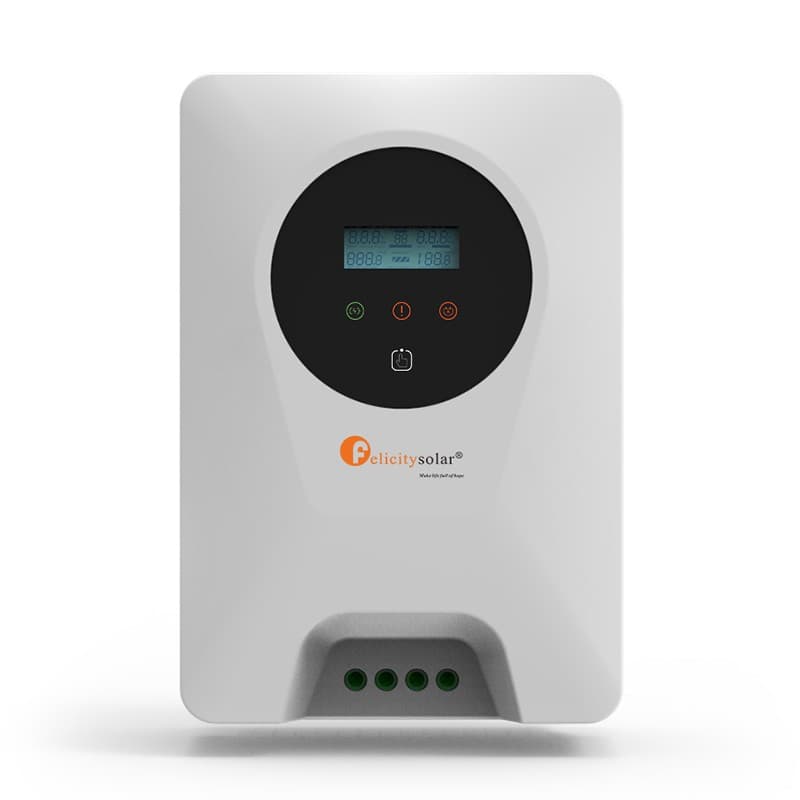
Twenty-five Felicity inverters are IP21 and every SCCM charge controller says indoor wall-mount. IP20, IP21 and IP31 are indoor ratings, and the first digit - the dust one - is the half nobody reads. Here is which listing carries which.
The only free wall in the house is the one outside, and the installer standing next to it with a drill says it will be fine. Before he makes the holes, read the two-digit number on the side of the box. It is the manufacturer telling you, in writing, exactly where that unit is allowed to live - and on a good part of our range the answer is indoors.
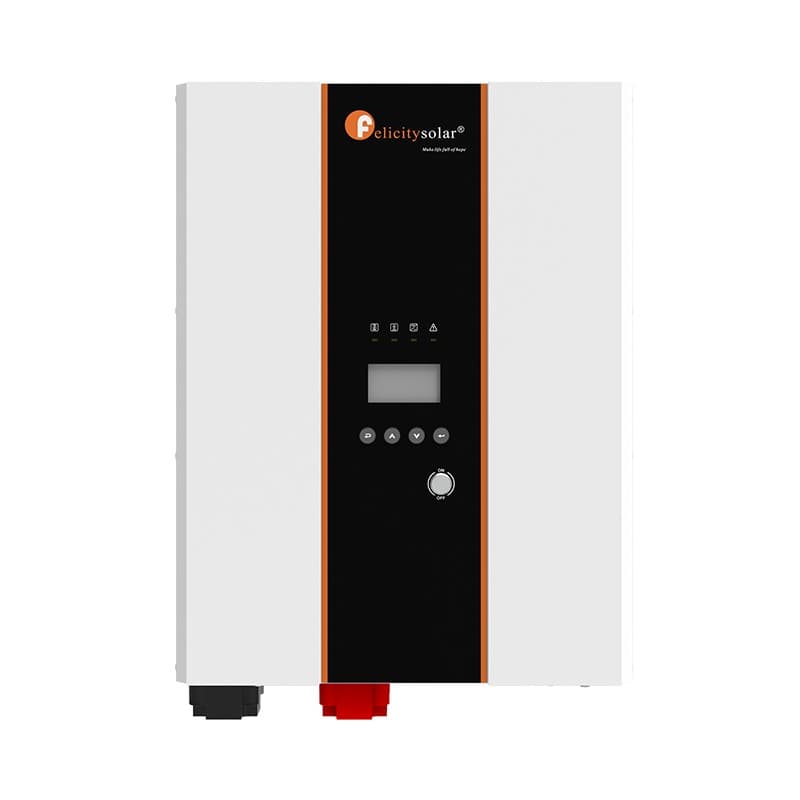
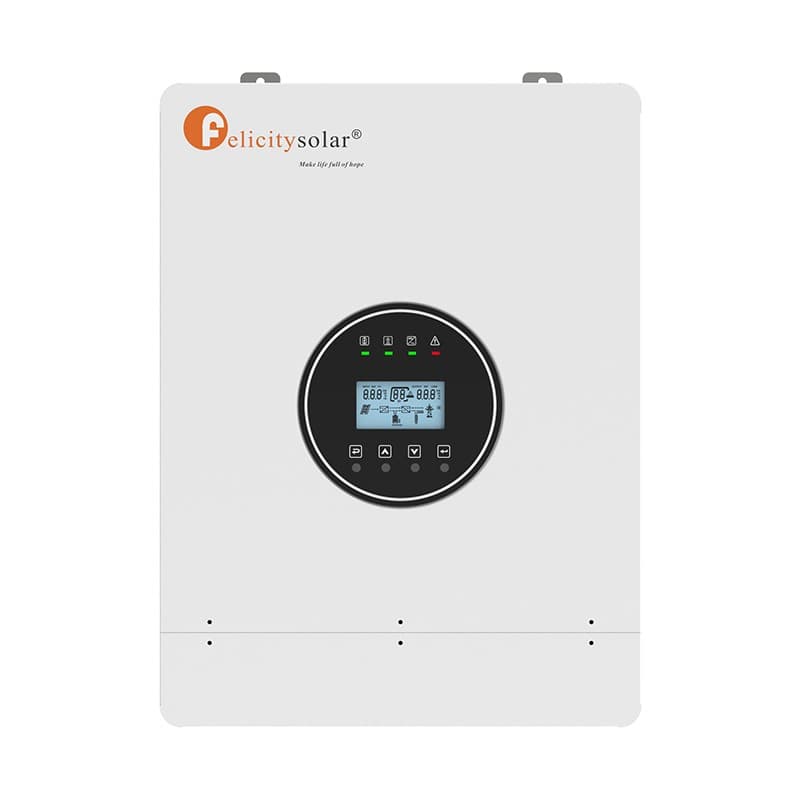
Here is the whole thing at a glance, from our own product records. Twenty-five inverter listings publish an IP rating of IP21 - the entire IVPS, IVPM, IVEM and IVCM families. Five charge controllers publish IP31, and all ten SCCM controllers publish an enclosure rating of IP20 (indoor and vented) together with installation: indoor wall-mount. Forty-two battery listings publish a protection degree of IP21. Against that, thirty-nine inverter listings are IP65, four are IP66, ten battery packs are IP65, and one controller is IP54. IP20, IP21 and IP31 are indoor ratings. Mounting one of those on an exterior wall is not a small optimism - it is putting a box that was never sealed against dust into the place where dust lives.
We are an authorised Felicity Solar distributor across all our markets. If you are not sure which rating your unit carries, send us the model before the installer arrives and we will read the row back to you: WhatsApp +971 4 255 0887, +971 4 255 0887, or sales@felicitysolar.me. It costs nothing and it is cheaper than a replacement.
What do the two digits actually mean?
An IP rating is two separate tests reported as one number, and almost everybody reads only the second half. The first digit is about solids - fingers, tools, wires, and above all dust. The second digit is about water.
| First digit (solids) | What it means |
|---|---|
| 2 | Protected against objects the size of a finger. No dust protection at all. |
| 3 | Protected against objects the size of a tool or a thick wire. Still no dust protection. |
| 5 | Dust-protected: dust may enter but not in a quantity that interferes. |
| 6 | Dust-tight. |
| Second digit (water) | What it means |
|---|---|
| 0 | No protection. |
| 1 | Protected against vertically dripping water. |
| 4 | Protected against splashing from any direction. |
| 5 | Protected against water jets. |
| 6 | Protected against powerful water jets. |
So IP21 reads as: keeps fingers out, survives a drip from a pipe above it, and offers nothing whatsoever against dust. IP31 is the same story with a slightly smaller object. IP65 reads as: dust-tight and able to take a hose. Those are not neighbouring specifications. They are different categories of product.
The full rating table for our range
| Rating | Listings | Where it belongs |
|---|---|---|
| IP20 | SCCM8048-P, and all ten SCCM controllers as an enclosure rating of IP20 (indoor and vented) | Indoors, in a ventilated space |
| IP21 | IVPS1512, IVPS2512, IVPS2524, IVPS3524, IVPS5024, IVPS5048, IVPS7548, IVPS10048, IVPS3524P1G1-LV, IVPS5048P1G1-LV, IVPM5048, IVPM7548, IVPM10048, IVEM3024, IVEM4024-II, IVEM5048, IVEM6048-II, IVEM8048-II, IVEM12048-11, the IVEM SALV and LV variants, and both IVCM models | Indoors |
| IP31 | SCCM2024-II, SCCM3024-II, SCCM4524-II, SCCM8048-II, SCCM12048-II | Indoors |
| IP54 | SCCM15048 | Dust-protected and splash-protected |
| IP65 | IVAM6048P1G1, IVAM8048P1G1, IVAM10048P1G1, IVAM12048P1G1, IVBM8048P1G1, IVBM10048P1G1, the IVGM single-phase and three-phase hybrids from 5 kW to 50 kW, and all thirteen T-REX models | Dust-tight, jet-protected |
| IP66 | IVGM75KHP3G1, IVGM80KHP3G1, IVGM100KHP3G1, IVGM125KHP3G1 | Dust-tight, powerful-jet-protected |
| IP66/IP67 | X-RAY-BDM2250W | The highest rating in the range |
One record, the IVDM4224P1G3, publishes IP6X - a dust-tight first digit with the water digit left unstated. That is not an oversight to fill in with a guess. It means the solids test was certified and the water one was not reported, and we will not tell you it is IP65.
The batteries publish the same thing under a different name
On the battery side the row is called protection degree rather than IP rating, and it is easy to miss because it sits lower in the table.
Forty-two battery listings publish IP21 - the whole FLA range including FLA48200, FLA48300, FLA48400TG1, FLA48500 and the FLA 12 V and 24 V packs, plus the LPB packs. Ten publish IP65: FLA48314-PLUS, the FLB wall packs (FLB24100WG1, FLB24205WG1, FLB24230WG1, FLB48100WG1, FLB48205WG1, FLB48230WG1, FLB48314TG1-H), FLH96050SG1 and FLS48050SCG1. One publishes IP55 (FLM500-125-261) and one IP54 (FLS-ES232LC-G).
This one surprises people, because a battery cabinet looks solid and heavy in a way an inverter does not. A 135 kg floor-standing pack is still an IP21 enclosure if that is what its record says, and weight is not a weather rating.
In Riyadh or Khartoum, it is the dust that gets them - not the rain
Most buyers read an IP number as a rain number, because that is what the word "weatherproof" suggests. In a dry, dusty climate the failure runs the other way round. Fine dust drifts through any opening that is not sealed, settles on heatsinks and boards, and does two things at once: it insulates the surfaces that were designed to shed heat, and it collects moisture on the few humid mornings there are.
That is why the first digit is the one to check on a Gulf or Sahel installation. IP21 and IP31 both begin with a digit that offers no dust protection whatsoever. A unit on a shaded outdoor wall that never sees a drop of rain in a year can still be full of dust by the end of it. Meanwhile the second digit - the one everybody looks at - is doing very little work in a place where it barely rains.
"I will just put it in a sealed box"
This is the most common fix and it is worse than the problem. Nearly all of these machines are air-cooled, and the specification sheet says so: Intelligent Air Cooling on the IVPS, IVPM, IVEM, IVBM, IVCM and IVAM families, Smart Cooling on most of the IVGM and T-REX hybrids. A sealed enclosure with no airflow takes a machine that was rated for a ventilated room and puts it somewhere hotter than the wall you were avoiding.
The SCCM controllers say it in the row itself: the enclosure rating is printed as IP20 (indoor and vented). Vented is part of the rating, not a suggestion. Eight of the ten SCCM listings also publish transient surge protection of 4,500 W per port, which tells you these are real outdoor-array electronics - designed to sit safely indoors at the end of a cable that goes outdoors.
A handful of models are cooled with no fan at all - the row reads Nature on the IVGM5KLP1G1 and on the T-REX-3KLP1G01, T-REX-3K6LP1G01, T-REX-4KLP1G01, T-REX-4K6LP1G01, T-REX-5KLP1G01 and T-REX-10KHP3G01. Those depend entirely on air moving freely across the case, which is another reason not to box anything in.
Temperature is the other half of "where does it go"
The IP rating tells you what can get in. The operating temperature range tells you what the air around it is allowed to be, and the two decide the location together.
Every IVPS and IVPM listing states 0 to 40 °C. The IVEM5048 states 0 to 55 °C, the IVEM8048-II and IVEM6048-II -10 to 50 °C, both IVBM models 0 to 50 °C, and the IVAM range -40 to 60 °C with derating above 45 °C. On the SCCM controllers the ambient range is 0 to 55 °C. On the batteries there are two different ranges again: the FLA packs charge between 0 and 55 °C and discharge between -20 and 55 °C.
Read those as room-air numbers, not shade-temperature numbers. A small closed store room under a metal roof passes 40 °C easily on a summer afternoon even though it is indoors, which is how a correctly-rated indoor installation still ends up outside its range.
What to do when the only wall you have is outside
You have three honest options and one bad one. The bad one is mounting an IP21 or IP31 unit outdoors and hoping.
The first honest option is to buy for the location: the IP65 range covers most needs, from the T-REX-5KLP1G01 and the IVGM hybrids up to the IVAM and IVBM off-grid machines, and the IP66 IVGM75KHP3G1 class above that. On the storage side the FLB wall packs and the FLA48314-PLUS carry IP65. The second is to build a real enclosure - a shaded, ventilated cabinet or a small structure with airflow, which satisfies both the IP row and the temperature row. The third is to move the electronics and extend the cable: panels stay outside, the inverter, the controller and the pack live indoors. That last one costs a little copper and solves the problem permanently.
Quick reference before the installer drills
Indoors only: IVPS, IVPM, IVEM and IVCM inverters (IP21); all SCCM charge controllers (IP20 indoor and vented, five of them also IP31); FLA and LPB battery packs (protection degree IP21).
Outdoor-capable: IVAM, IVBM, IVGM and T-REX inverters (IP65); IVGM75KHP3G1, IVGM80KHP3G1, IVGM100KHP3G1 and IVGM125KHP3G1 (IP66); X-RAY-BDM2250W (IP66/IP67); FLB wall packs, FLA48314-PLUS, FLH96050SG1 and FLS48050SCG1 (protection degree IP65); SCCM15048 (IP54).
Every one of these figures is on the product page it belongs to, in the environmental section of the spec table, and you can check any of them yourself in under a minute. Browse the inverters, the batteries and the charge controllers, or send us the model and we will read it out.
Frequently Asked Questions
Can I mount a solar inverter outside?
What does IP21 mean on an inverter?
Can a charge controller be installed outdoors?
Can I put an IP21 inverter in a sealed weatherproof box?
Are Felicity batteries rated for outdoor installation?
Does dust or rain matter more in the Gulf?
Ready for a personalized quote?
WhatsApp us — average reply time under 15 minutes.