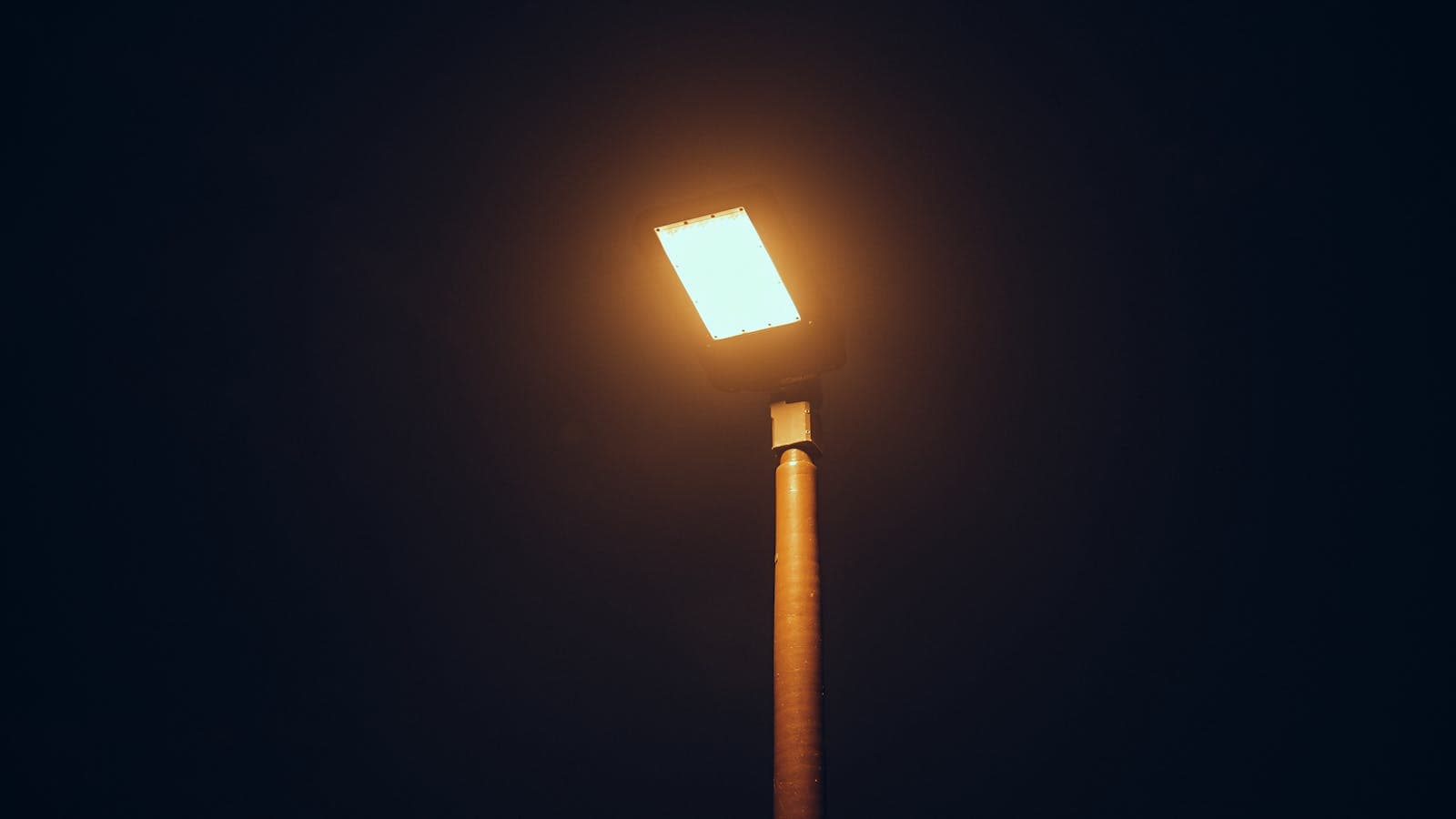
Light a road, a farm track or a compound wall with no trench, no cable and no meter. What to check before you order — whether the site is inland or coastal, what your poles measure, and how high the fitting goes.
A solar street light needs no trench, no cable and no meter, which is why one goes up on a farm track or a compound wall in an afternoon. What it does need is to be chosen for the air it will stand in, and Saudi Arabia does not buy street lighting in one climate. An order for Riyadh is written against dry heat and airborne dust on the Najd plateau; an order for Jeddah is written against Red Sea humidity and salt-laden air; an order for Al Ahsa is usually a farm road, a date-palm plot or a walled compound in the Eastern Province oasis where there is no cable to tap into at all. The fixture on the quotation can be identical in all three, and that is precisely the mistake. We are an authorised Felicity Solar distributor and supply Saudi Arabia from our own stock, so this article is written the way we actually specify an order: row by row, off the product page, with the model code named in full. Anything we cannot read off a Felicity record is not printed here.
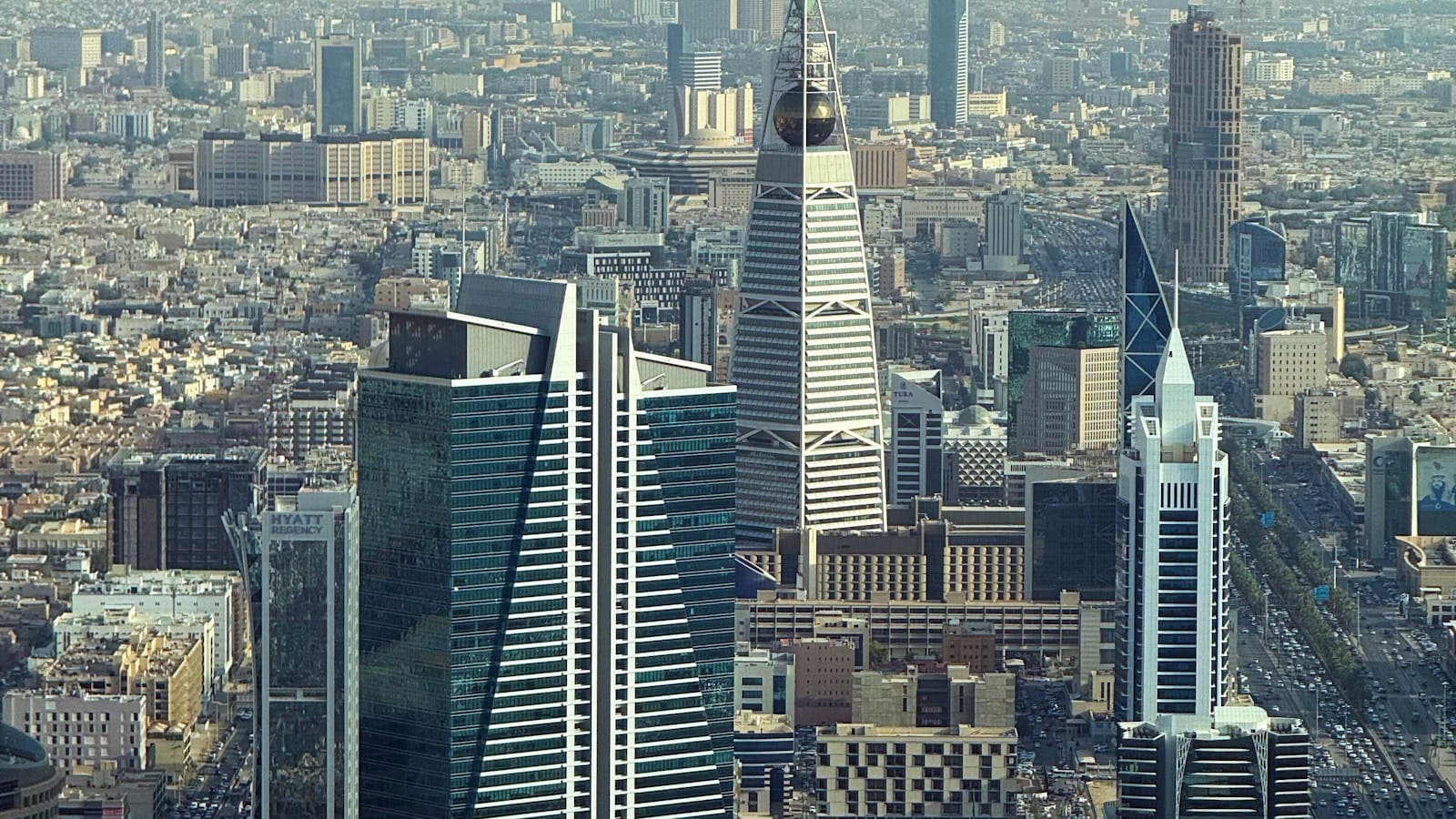
Riyadh and Jeddah do not buy the same light
Inland: keeping the dust out
Dust does not attack a luminaire chemically. It gets inside, and what decides whether it gets inside is the ingress rating and how many separate boxes are hanging on the pole. Most of the range we carry prints IP65 on its own page: A3-40W, A3-150W-S, D2-80W-P, D2-150W, F1-80W, F1-120W, F1A-120W, F2-120W, P2-80W and P3-80W-II all state IP65 in the environmental block. Three models state IP66 instead — HPFL05003, HPFL10003 and HPFL15003 — and on an inland site that one step is the reason to look at them.
The second inland question is joint count. The A3-40W is a single sealed head: its 350Wh lithium pack sits inside the same body as the 40 W LED and the 60W (Mono) module, so nothing else is bolted to the pole. The D2 fixtures split the pack out — the D2-80W-P ships a battery box of 235 x 175 x 250 mm weighing 8.8 kg, and the D2-150W a larger one at 555 x 195 x 400 mm and 17.0 kg. A separate box is not a fault; it is simply one more enclosure and one more cable gland to keep sealed for the life of the installation, and that is a maintenance decision a Riyadh facilities team should take deliberately rather than by accident.
On the coast: what salt air really asks of a fitting
On the Jeddah side the enemy is moisture and salt rather than grit, and the row that answers it is the permissible ambient humidity, which is printed separately from the IP rating. The A3 and D2 fixtures state ≤90%RH. The F1-60W, F1-80W and F2-80W state something different and more specific — 0~90% (No condensation) — which is a limit on the condition of the air, not only on its moisture content. On a coastal wall where a fixture cools at night and warms at dawn, that wording is the one to read twice.
The HPFL fixtures carry the widest published environmental window of anything in the street-light catalogue: HPFL10003 and HPFL15003 are both rated -30°C to +60°C inside an IP66 housing. Those are the manufacturer's rated limits printed on the product page, and they are the only temperature figures in this article; we do not publish a Saudi ambient temperature, because no source we are permitted to read states one.
Will it fit the poles you already have?
The single most common way a Saudi lighting order goes wrong is the pole. Poles are bought on one contract and luminaires on another, and the fixture then does not clamp. Every Felicity street light prints its pole diameter, and the range is genuinely varied.
| Pole diameter | Models | Support bracket supplied |
|---|---|---|
| 60 mm | P2-40W, P2-60W, P2-80W, P3-60W-II, P3-80W-II | No |
| 76 mm | D2-30W-P, D2-40W-P, D2-60W-P, D2-80W-P | No |
| 76 mm | D2-100W-S, D2-120W-S | Yes |
| 76-114 mm | A3-30W, A3-40W | Yes |
| 80 mm | F1-60W, F1-80W | No |
| 80 mm | F1-120W, F1A-120W | Yes |
| 114 mm | A3-60W, A3-60W-P, A3-100W-S, A3-150W-S | No |
| 114 mm | D2-150W | Yes |
Read that table as two facts, not one. A3-30W and A3-40W accept anything from 76 to 114 mm, which is why they survive a mixed pole inventory on an older compound. Everything else wants one diameter. And the bracket is not universal: D2-80W-P, F1-80W, A3-100W-S and the whole P2 and P3 group print No against the support-bracket row, while A3-40W, D2-120W-S, D2-150W, F1-120W and F1A-120W print Yes. HPFL10003 and HPFL15003 are different again — they mount wall or pole with a bracket, which is what makes them the obvious answer for a boundary wall rather than a carriageway.
How high it goes picks the model, not the wattage
Wattage sells the fixture and height decides it. Felicity prints a recommended installation height on every unit, and it climbs in bands.
| Recommended height | Models | Typical Saudi use |
|---|---|---|
| 3-5 m | A3-30W, D2-30W-P, P2-40W, P3-60W-II | Compound footpaths, villa perimeter, garden runs |
| 3-6 m | A3-40W, D2-40W-P, P2-60W, P3-80W-II | Internal compound roads, parking bays |
| 5-7 m | A3-60W, A3-60W-P, D2-60W-P, F1-60W, P2-80W, F2-80W | Service roads, farm tracks, yard lighting |
| 6-8 m | D2-80W-P, F1-80W | Distributor roads inside a district |
| 6-9 m | A3-100W-S, D2-100W-S, D2-120W-S, F2-120W | Municipal streets |
| 7-10 m | A3-150W-S, D2-150W | Main roads and junctions |
| 8-10 m | F1-120W | Main roads on a slimmer 80 mm pole |
| 10-12 m | F1A-120W | The tallest recommended mounting we stock |
Two models go further and publish a pole-to-pole spacing as well, which is unusual and useful when a contractor is laying out a run rather than replacing a single head: P3-60W-II states 10-15 m and P3-80W-II states 15-20 m. If the layout drawing has to be defended, those are the two records that carry the number.
The same wattage does not mean the same light
Luminous flux is where an all-in-one range separates, and the 80 W band shows it plainly. Five 80 W fixtures, five different outputs: P3-80W-II gives 7200 lm, P2-80W gives 9600 lm, D2-80W-P gives 10080 lm, F1-80W gives 12800 lm and F2-80W gives 14400 lm. Every one of those is the figure on that model's own page, and the spread is nearly double from end to end.
The same happens at 60 W, and it is worth knowing because the two fixtures share a name. A3-60W delivers 9600 lm on a built-in 532Wh pack; A3-60W-P delivers 8100 lm on a built-in 400Wh pack. Identical LED rating, different light, different reserve. At 120 W, D2-120W-S and F1-120W both give 19200 lm while F2-120W and F1A-120W both give 21600 lm. At 150 W, A3-150W-S and D2-150W both reach 24000 lm, but they get there from different modules — 150W (Mono) on the A3-150W-S and 190W (Mono) on the D2-150W — and the bigger module is what shortens the recovery after a dull day.
How many nights it keeps burning without sun
Across the A3, D2, F1, F2, P2 and P3 fixtures the working-time row reads ≥12 hours on all light patterns, the charge row reads 8H strong sunlight, and the rainy-days backup row reads 3 days. Those three numbers only make sense together with the dimming schedule, because the schedule is what buys the twelve hours. A3, D2 and F1 fixtures step 4H at 100%, then 4H at 50%, then 4H at 25%. The P2 and P3 fixtures step 3H at 100%, 4H at 50% and 5H at 25%. F2-120W is stepped differently again — 0.5H at 100%, 3.5H at 50%, 3H at 25% and 5H at 12% — which front-loads the evening and holds a long low tail.
The reserve itself is not the LED rating; it is the watt-hour row. A3-30W carries a built-in 260Wh pack, A3-40W 350Wh, D2-80W-P 650Wh, D2-120W-S 999Wh and A3-150W-S 1240Wh. When somebody asks for "three days of backup" on a Saudi tender, the honest answer is that three days is what the record states for that fixture's own schedule, on its own pack, after a full 8H charge — not a promise transferable between models.
The HPFL fixtures work on a different principle and are worth a separate look for a compound that wants control rather than automation. HPFL10003 and HPFL15003 both offer selectable 3-hours, 5-hours or 8-hours lighting plus an automatic mode, respond to a switch, a remote control or light control, and recharge in 6-8 hours of direct sun — the HPFL15003 from a 45W module into a 134Wh LiFePO4 pack behind 308 LEDs, the HPFL10003 from a 35W module into a 111Wh pack behind 192 LEDs. Both hold a colour rendering index of Ra ≥ 75 and a design life of ≥3 years, and both are certified to CE and RoHS.
What the sensor is actually for
Induction mode is optional on the A3, D2, F1 and P-series fixtures, and the detection angle differs by family: 70° x 140° on A3-40W, P2-60W and P3-80W-II, and 75° x 145° on D2-80W-P, F1-80W and F2-120W. F1A-120W implements it differently from everything else we carry — its induction mode runs all night at 20% and lifts to 100% the moment movement enters the angle, rather than switching between on and off. On a farm track in Al Ahsa or a compound service road that behaviour is the difference between a light that looks broken and a light that looks attentive.
You do not need an inverter for the lights
This matters commercially, because the two get quoted against each other by mistake. A Felicity street light is a DC device: a monocrystalline module charges a lithium pack inside the head, and the LED runs off that pack. There is no AC anywhere in it, no separate solar inverter, no trenching and no connection to a meter. That is exactly why it suits a Saudi site with no usable supply. If the same site also needs AC — a pump, a cabin, a security cabin with a chiller — that is a separate purchase from the inverter range, sized on its own rules, and a street light will never do that job however many are installed.
Sending us a lighting order
Riyadh, Jeddah and Al Ahsa are all served from the same stock, and quantity does not change the specification — it changes the pole schedule. Send us the pole diameters you already have, the mounting heights on the drawing and whether the run is a compound path or a carriageway, and we will answer with model codes rather than a series name. The full range is on the street lights page, and the market terms are on our Saudi Arabia page.
One last figure to check before signing: the warranty term is not uniform across this catalogue. A3-40W, D2-80W-P, F1-80W, HPFL10003 and HPFL15003 are supplied with 2 Years. F2-120W is supplied with 2.5 Years. P2-80W and P3-80W-II are supplied with 3 Years. F1-120W and F1A-120W are supplied with 5 Years. On a large municipal order that spread is worth more than a small difference in luminous flux.
Frequently Asked Questions
Riyadh or Jeddah — does the same light work in both?
Which Felicity street light fits my existing poles?
How many nights will it keep lighting without sun?
Is a 100 W solar street light bright enough for a municipal road in Riyadh?
Do I need a solar inverter as well as the street lights?
How long is the warranty on Felicity street lights?
Can I mount these on a compound wall instead of a pole?
Can you supply a whole project, or only a few lights?
Ready for a personalized quote?
WhatsApp us — average reply time under 15 minutes.