What a solar kit with battery holds for an apartment, a shop and a farm: the Felicity inverter, battery and panels, with the arithmetic behind each.
A solar kit with a battery is three lines on one page: an inverter, a battery and a row of panels that have been checked against each other. Felicity's catalogue holds all three, and the ready-made kits page computes a kit for six kinds of site. This article opens three of them — an apartment, a shop and a farm — and shows the arithmetic behind every figure, so you can check it, or redo it with your own loads in the sizing calculator.
Products mentioned in this article
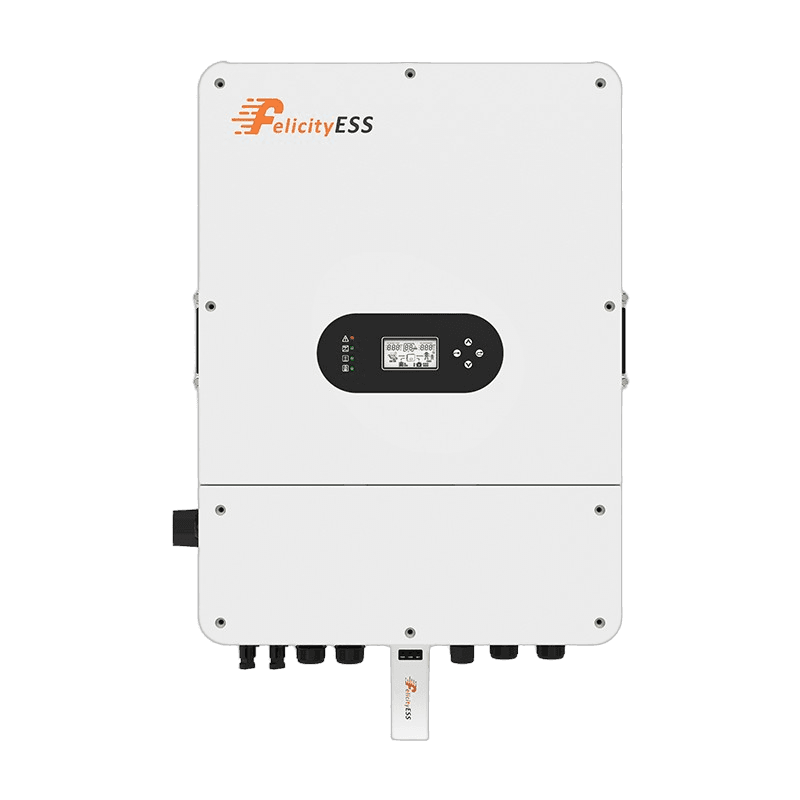
Felicity Solar IVGM5KLP1G1 5kW Single-Phase Hybrid Solar Inverter
- Rated Output Power:5 kW
- Max Efficiency:97.6 %
Felicity Solar FLA48350TG2 51.2V 17.5kWh LiFePO4 Battery
- Nominal Energy:17.5 kWh
- Nominal Capacity:350 Ah
Felicity Solar FLS48050SCG1 51.2V 2.56kWh LiFePO4 Battery
- Nominal Energy:2.56 kWh
- Nominal Capacity:50 Ah

Felicity Solar IVGM6KLP1G1 6kW Single-Phase Hybrid Solar Inverter
- Rated Output Power:6 kW
- Max Efficiency:97.6 %
Felicity Solar LPBF48100-M 51.2V 5kWh LiFePO4 Battery
- Nominal Energy:5kWh
- Nominal Voltage:51.2V
Felicity Solar T-REX-4KLP1G01 4kW Single-Phase Hybrid Solar Inverter
- Rated Output Power:4 kW
- Max Efficiency:97.5 %
What the battery changes in a kit
A kit without storage only has to cover the day's energy. Add a battery and two more things must be true. The inverter has to be a hybrid: a unit that charges the battery from the panels and carries the house on it when the grid stops. And the battery's voltage has to lie inside the window the inverter's own record states. The three hybrid inverters in the kits below each state a battery range of 40-60 V, and the batteries beside them are 51.2 V lithium iron phosphate (LiFePO4) units, inside that window.
The size of the battery follows the hours you want covered. The kits come in two lengths of backup: four hours, an evening, and eight hours, a night. The calculator spreads your daily consumption over 24 hours and multiplies by the backup hours, and it counts 90% of a battery's nominal energy as usable.
Kit 1: an apartment, four hours of backup
The apartment load is one 1.5-ton air conditioner (1,200 W for 8 hours, 9.6 kWh), a fridge (1.2 kWh), lighting and Wi-Fi (1.6 kWh), a TV (0.6 kWh) and a washing machine (0.8 kWh): 13.8 kWh a day. Everything running together draws 2,450 W, and the air conditioner starting adds 2,400 W on top, so the inverter has to stand a 4,850 W peak.
- Inverter: IVGM5KLP1G1, 5 kW hybrid, single-phase, two MPPT inputs, up to 6.5 kW of recommended PV, IP65.
- Battery: 13.8 kWh × 4 ÷ 24 = 2.3 kWh to cover, so one LPBF48100-M, 51.2 V 5 kWh, counted as 4.5 kWh usable.
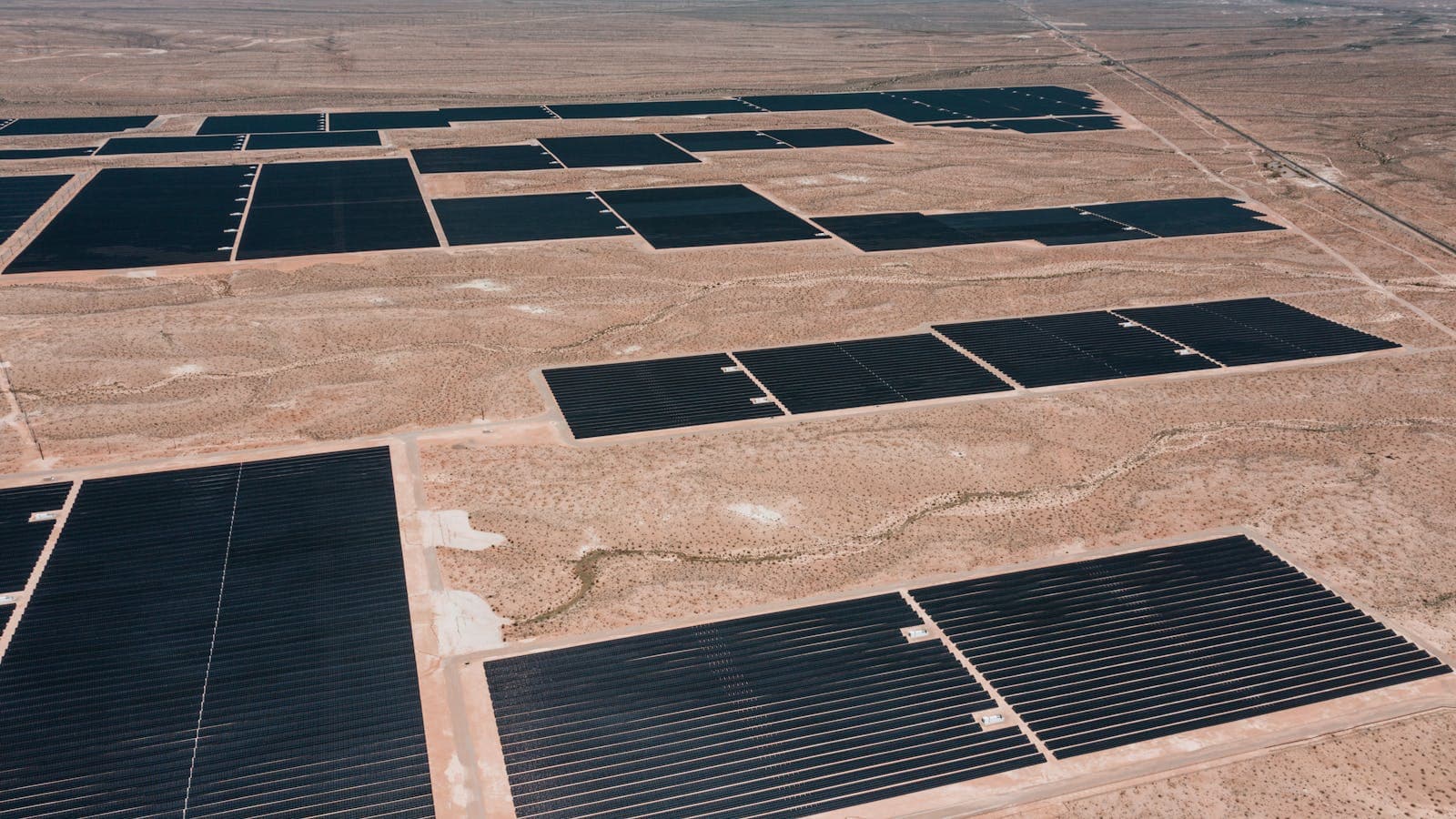
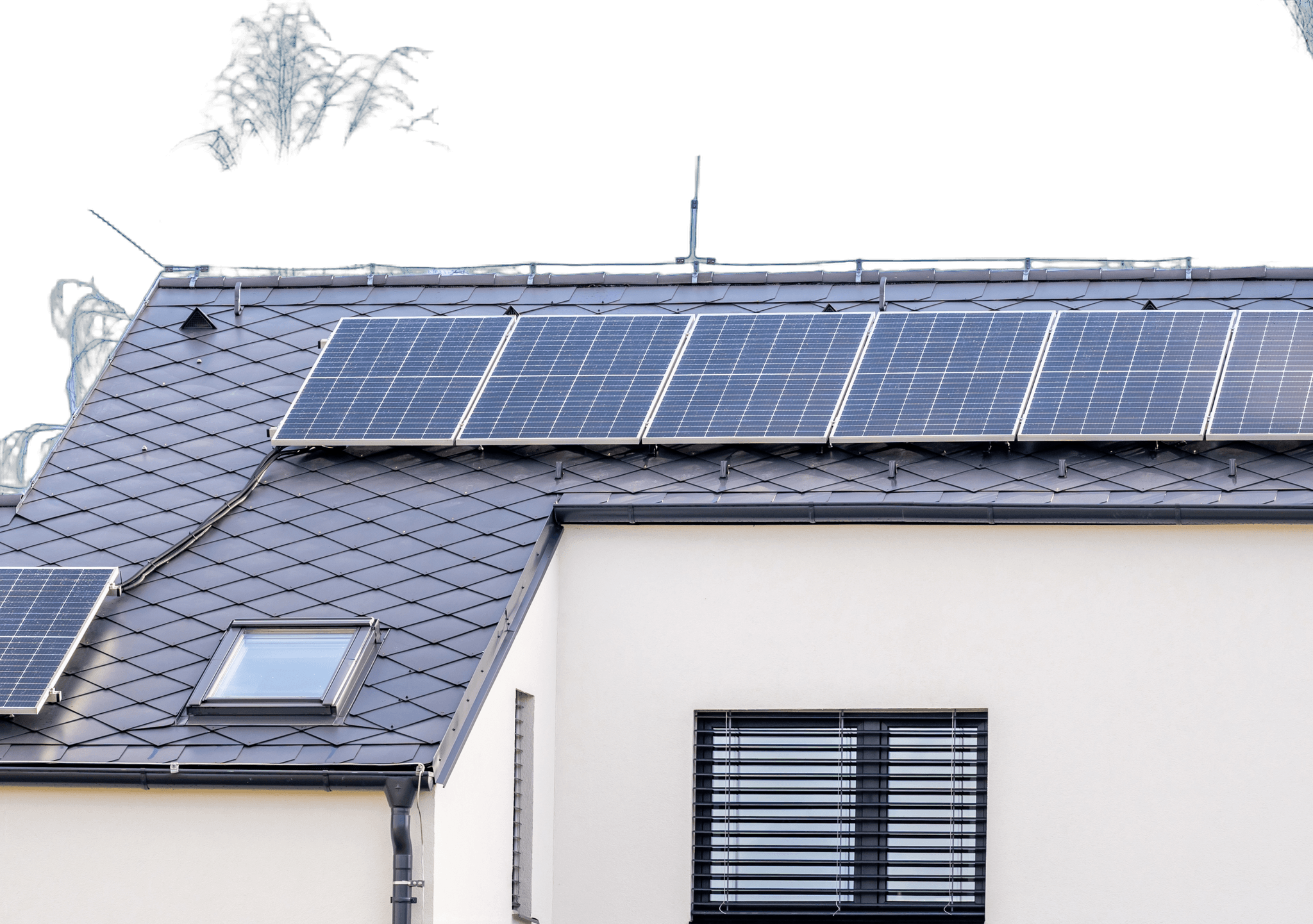
- Panels: 13.8 ÷ (5.7 sun hours × 0.8) = 3.03 kWp, so six 580 W GK-1-72HTBD-580M panels, 3.48 kWp on about 16 m² of roof.
The whole list, with today's prices, is on the apartment evening-backup kit page. Ask for eight hours instead and the need doubles to 4.6 kWh; the battery line becomes the FLA48200, 51.2 V 10 kWh, and nothing else moves.
Kit 2: a shop, eight hours of backup
A small shop with two air conditioners, a fridge, two lighting circuits and a till computer uses 25.2 kWh a day and peaks at 5,550 W.
- Inverter: IVGM6KLP1G1, 6 kW hybrid, up to 9 kW of recommended PV, 10 ms transfer time.
- Battery: 25.2 × 8 ÷ 24 = 8.4 kWh, so one FLA48350TG2, 51.2 V 17.5 kWh, 15.75 kWh usable, floor-standing, 121.5 kg.
- Panels: 25.2 ÷ 4.56 = 5.53 kWp, so ten 580 W panels, 5.8 kWp on about 26 m².
The calculator picks the largest single battery that is no more than twice the need, which is why a 17.5 kWh unit stands beside an 8.4 kWh night. The page is the shop overnight-backup kit.
Kit 3: a farm, four hours of backup
Two 1 HP water pumps, a fridge, a freezer and lighting come to 6.65 kWh a day. The peak, 3,925 W, is set by a pump starting, not by the running load.
- Inverter: T-REX-4KLP1G01, 4 kW hybrid, up to 5.2 kW of recommended PV.
- Battery: 6.65 × 4 ÷ 24 = 1.11 kWh, so one FLS48050SCG1, 51.2 V 2.56 kWh, 2.30 kWh usable.
- Panels: 6.65 ÷ 4.56 = 1.46 kWp, so three 580 W panels, 1.74 kWp on about 8 m².
It is the smallest of the set: the farm evening-backup kit.
The three kits side by side
| Site | Daily use | Peak | Inverter | Battery | Panels |
|---|---|---|---|---|---|
| Apartment, 4 h | 13.8 kWh | 4,850 W | IVGM5KLP1G1, 5 kW | LPBF48100-M, 5 kWh | 6 × 580 W |
| Shop, 8 h | 25.2 kWh | 5,550 W | IVGM6KLP1G1, 6 kW | FLA48350TG2, 17.5 kWh | 10 × 580 W |
| Farm, 4 h | 6.65 kWh | 3,925 W | T-REX-4KLP1G01, 4 kW | FLS48050SCG1, 2.56 kWh | 3 × 580 W |
Where a kit page names no inverter
For the house, villa and office backup kits the page names the battery and the panels, and states the inverter rating the load needs — 9 kW, 12 kW and 10 kW — as a plain line with no model beside it. The off-grid versions of the same sites do name one: the IVAM10048P1G1 (10 kW) and the IVAM12048P1G1 (12 kW). Read the line as it is written; a rating is not a product.
Sun hours move the panel count, not the battery
The kit pages are computed for 5.7 peak sun hours a day. At 3.7 hours, the figure the same engine holds for France, the apartment's array becomes 13.8 ÷ (3.7 × 0.8) = 4.66 kWp: nine 580 W panels instead of six, still under the 6.5 kW of PV the IVGM5KLP1G1 record recommends. The battery does not change, because it is sized on consumption and hours.
From the kit to an order
Each line of a kit links to its product page, where the price shown is the price you pay and the IVGM5KLP1G1 datasheet is one click away. Orders are collected from our store in Dubai or Riyadh. If one figure in a kit is unclear, ask on WhatsApp and name the kit.
Frequently Asked Questions
What does a solar kit with battery include?
How big a battery does a solar kit need for one night?
How many panels are in a 5 kW solar kit with battery?
Can I add a second battery to the kit later?
Ready to order?
Every unit in the catalogue carries its price — add it to the cart and order online, then collect it from our store in Dubai or Riyadh.